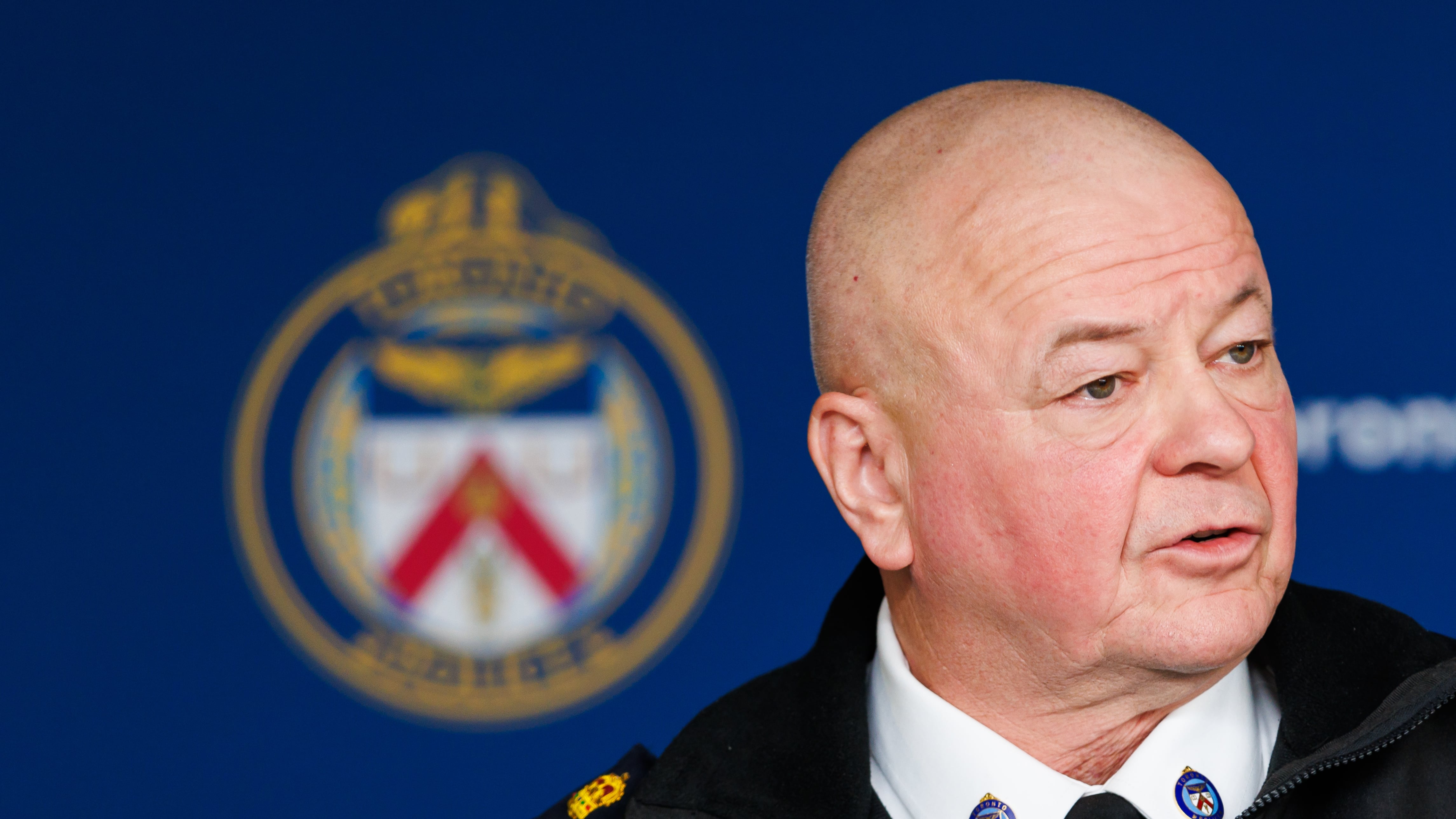
Toronto Police Service (TPS) Chief Myron Demkiw is pushing back against the province’s solicitor general, who claimed that enforcement is lacking in thwarting hate crimes in the city.
In a letter to Ontario Solicitor General Michael Kerzner on Thursday, Demkiw and TPS Board Chair Coun. Shelley Carroll maintained that Toronto police officers have been enforcing the law and “to suggest they are not doing their jobs is inaccurate, and contributes to eroding public trust in them.”
They noted that officers made over 460 arrests and laid more than 1,000 charges over the past two years.
“It undermines trust by suggesting that police possess authority beyond what the laws actually permit, which creates even more fear and confusion in our communities,” Demkiw wrote in the letter.
TPS, he said, has been consistent in standing up against hate and antisemitism, which has dramatically risen since the Oct. 7, 2023, terrorist attack in Israel.
“Toronto Police Service officers do difficult and incredible work every day, and they deserve respect and support as they continue to do everything they can to keep our communities safe,” Demkiw and Carroll wrote.
They then requested Kerzner to meet with them, along with Ontario Attorney General Doug Downey, to further discuss what else can be done to support the police.
Kerzner seeks visible enforcement
Wednesday’s letter was in response to Kerzner’s Dec. 30 letter in which he called for “firm, consistent and visible enforcement of hate, intimidation and harassment-motivated offences” by Toronto police.
Kerzner wrote that recent “mob intimidation and harassment” at CF Eaton Centre and “intimidating” marches through neighbourhoods near Bathurst and Sheppard were “completely unacceptable.”
“These incidents have left many residents living in a state of heightened fear and anxiety, concerned about a lack of visible response and feeling unable to move freely and safely in public spaces or within their own neighbourhood,” the solicitor general wrote.
Kerzner noted in his letter that the province strongly supports Toronto police officers by giving them the tools and legislative authority to respond to the incidents.
“With those tools in place, enforcement at the local level is critical. The responsibility now rests with police leadership to ensure that existing authorities to act are used promptly and decisively when criminal acts of hate and intimidation are taking place,” Kerzner wrote.
Chief and TPS Board chair responds
In their letter, Demkiw and Carroll addressed the incidents Kerzner cited. They wrote that officers responded to the Eaton Centre within minutes, and when they arrived, demonstrators were already leaving.
The two pointed out that the mall is private property and there are many legal considerations for police when it comes to dealing with issues that are not criminal.
“The activities of protesters have been reviewed, including video, and while this incident has understandably caused distress, the evidence in this case does not rise to the level of criminality,” they wrote, noting that the demonstrators were in the mall for 12 minutes.
As for the demonstrations in residential neighbourhoods, Carroll and Demkiw maintained that there is a visible police presence in those areas and officers are prepared to intervene if someone breaks the law.
They noted that police have been consistently consulting with Crown attorneys for legal advice and that the conduct during the Bathurst and Sheppard demonstrations does not meet the legal threshold for criminal charges.
“It is deeply frustrating for the Service and its members, who have been on these front lines, to continue to face criticism even while operating within the law and legal parameters established through ongoing consultation with, and the advice provided by, provincial Crown Attorneys,” Carroll and Demkiw wrote.
“Demonstrations engage Charter-protected rights, and police can lay charges only when they have reasonable grounds to believe a criminal offence has taken place. That is the law, and it is the framework within which every officer must operate,” they added.
Calls for further provincial support
In their letter, Carroll and Demkiw called on the province to provide strong prosecutorial support to ensure that charges laid by police are tested in court. They mentioned that Crown attorneys have withdrawn charges against protesters without consultation with investigators.
“We maintain a strong relationship with provincial Crown Attorneys of the Ministry of the Attorney General, but it is a reasonable expectation in policing to have consistency between these key ministries for the policing sector,” they said.
The two also reiterated their advocacy for a specialized prosecutorial expertise for hate crime cases and voiced their support for a legislative motion that would designate specific Crown attorneys for hate crime prosecutions.
They added that they also support amendments to the Highway Traffic Act to address protests at the Avenue Road bridge over Highway 401, but noted that no change has occurred so far.
Carroll and Demkiw also called out the province for denying their application in 2023 for the Proceeds of Crime grant and for not responding to their request for financial support to help fund Project Resolute, which is the Toronto police’s operational response to protests.
“The Toronto Police Service Board is committed to the ongoing work to challenge both hate and antisemitism in the city through adequate resourcing and renewed community partnerships and dialogue with police governance partners,” Carroll and Demkiw wrote.
“Addressing hate and violence meaningfully requires clear and effective laws, education, leadership, and accountability, across the entire justice system and beyond.”