The federal government says it is reducing the housing funding it is giving to Toronto after the city failed to permit city-wide sixplexes.
Ottawa made the announcement on Friday, saying Toronto’s Housing Accelerator Fund (HAF) will be reduced by $10 million “as a commitment under the agreement has not been fully met.”
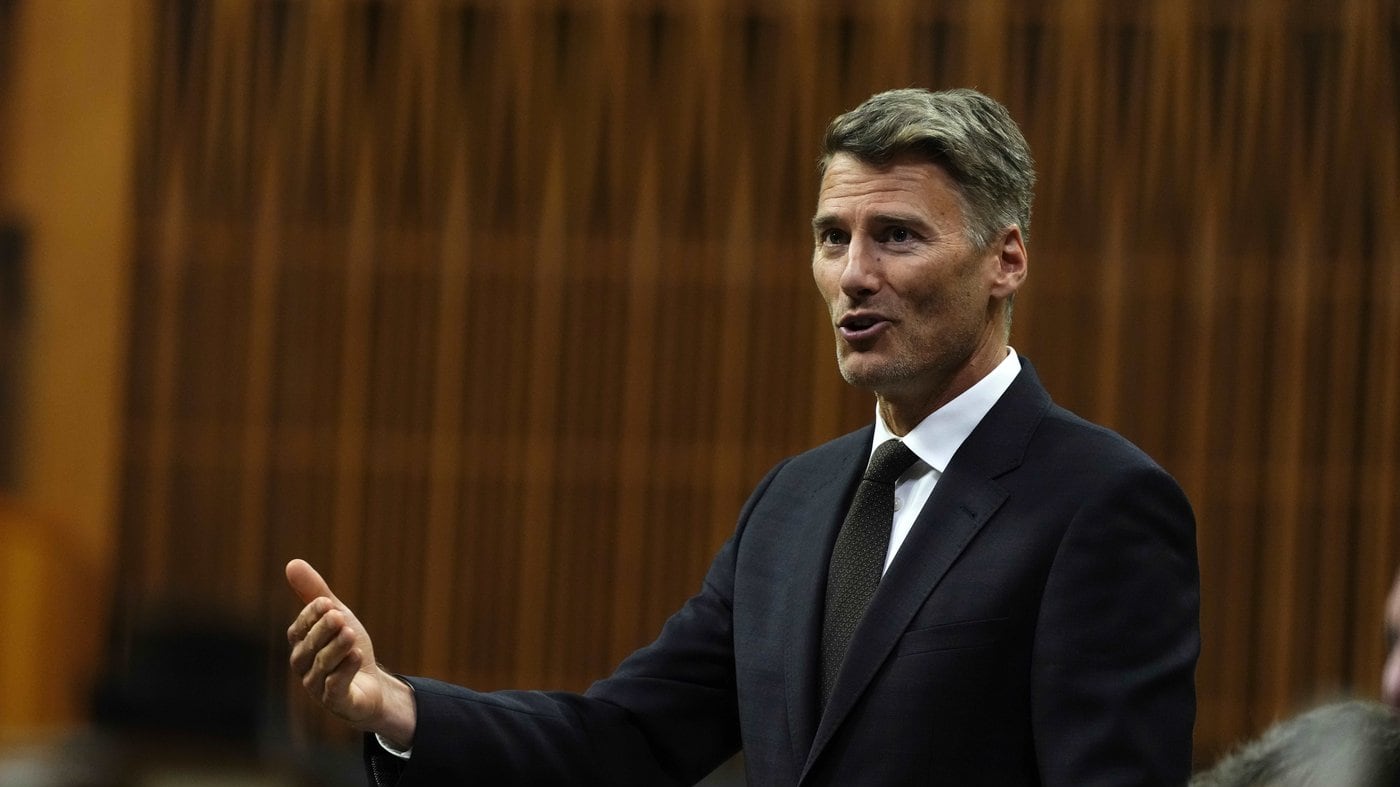
“Our government is committed to removing barriers and cutting red tape to enable more housing development in communities across Canada. We are also committed to demonstrating the results of the Housing Accelerator Fund and being transparent, while maintaining the integrity of agreements, as we work to build more homes across Canada,” Housing Minister Gregor Robertson said in a statement.
In his letter to Mayor Olivia Chow on Friday, shared with CP24, Robertson stated that while Toronto made significant progress on some of the delayed housing initiatives, it fell short on one.
It was the council’s decision to permit only sixplexes in nine wards, rather than across the city. After council voted to limit where sixplexes could be built, the federal government threatened to cut 25 per cent of Toronto’s annual funding payment.
Robertson wrote in his letter that sixplexes would build on Toronto’s existing permissions allowing fourplexes and “shorten the timeline and costs to develop much needed missing middle housing for Torontonians.”
“As you know, Council opted to limit these permissions to only nine wards, falling short of our joint ambition, and keeping in place unwarranted restrictions on missing middle housing in much of the city,” the minister wrote.
“To account for this shortfall, and with consideration of your progress on the other previously delayed initiatives, I will be reducing your HAF agreement by $10 million, to be divided equally between your two remaining payments.”
In 2023, Toronto signed an HAF agreement with the federal government, which earmarked $471.1 million to build 60,980 new homes over three years.
The city has already received $235.56 million of that money. Toronto is supposed to get a third payment in March and a final payment at the end of the year, as long as it achieves its goal of building 60,980 net new permitted homes by then.
In a statement, the mayor’s office touted the city’s efforts to construct more housing and said Chow will continue to work with the minister and the federal government to achieve this.
“Next year, the City of Toronto will break ground on 28,000 rental units, with nearly 10,000 of them affordable and rent-controlled homes that Mayor Chow has secured through financial incentives,” Chow’s office said.
“Over the past few years, the city has been re-zoned to permit multi-unit housing, including multiplexes, townhouses, garden and laneway suites in neighbourhoods. We have made it possible to build more small apartment buildings on major streets, more mid-rise buildings on avenues, and even more density around transit stations.”
Toronto was not the only municipality that got its funding slashed. The federal government also cut Vaughan’s by $7.4 million “as several commitments under the agreement have not been met.”
Vaughan signed an HAF agreement in 2023 and was allocated $59 million to create more than 1,700 new housing units and incentivize thousands of additional homes over the next three years.
Vaughan Mayor Steven Del Duca says he is disappointed by the decision, noting that the federal government did not consider the city reducing residential development charges and streamlining site plan approvals.
“Vaughan has met the overwhelming majority of its milestones under our Housing Accelerator Fund agreement, and we are on track to deliver on the remaining commitments this year,” Del Duca said in a statement.
“Notwithstanding today’s decision, we will continue to work with all partners to ensure that we build more homes as soon as possible, in particular for first-time homebuyers and young families in our city.”