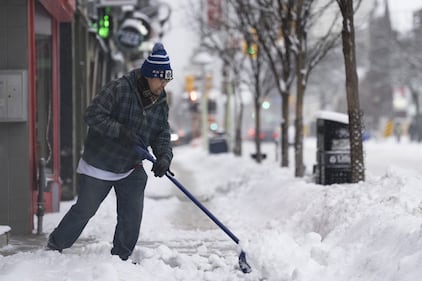
Toronto getting hit by major snowstorm. Here is a look back at Toronto's biggest winter storms
Even before the start of this year’s winter season, Toronto already saw record-breaking snowfall in November and December. Here’s a look at some of the significant winter storms that have hit Toronto.
Published:
Image 0 of 29
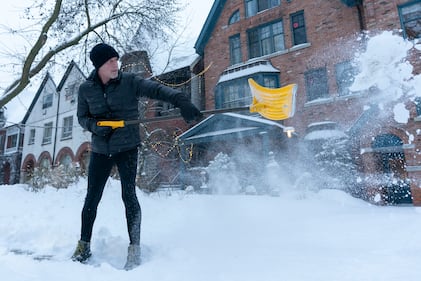
Even before the start of this year’s winter season, Toronto already saw record-breaking snowfall in November and December. Here’s a look at some of the significant winter storms that have hit Toronto.
(Arlyn McAdorey/The Canadian Press)
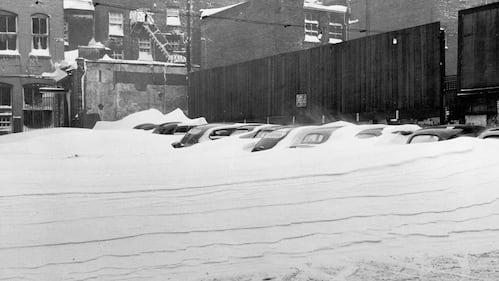
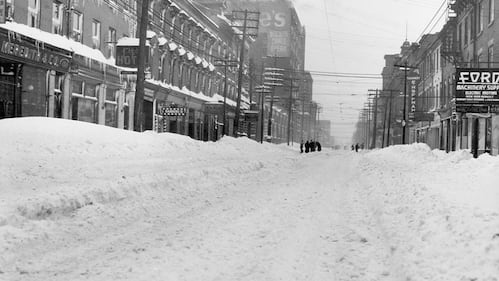
December 1944: A historic blizzard From Dec. 11 to Dec. 12, 1944, a blizzard dumped 57 centimetres of snow in the city. It was more than the 30 centimetres that was forecasted, which caught the city by surprise. (City of Toronto Archives)
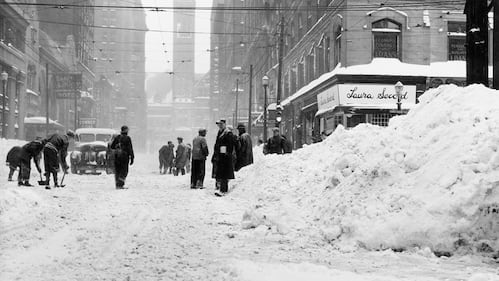
The blizzard also pounded Toronto with strong winds, causing more chaos. It led to home deliveries of milk, ice, and fuel being halted. Many were left without a way to cook or heat their homes. (City of Toronto Archives)
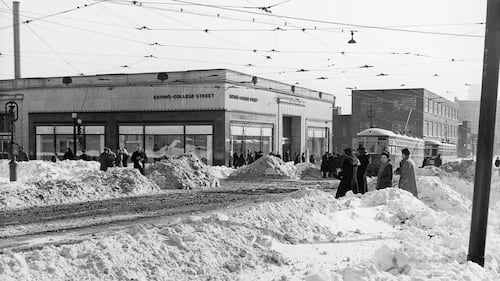
According to Public Safety Canada, factories producing Second World War ammunition had to close temporarily. With many able-bodied people away on military service, snow cleanup was challenging. (City of Toronto Archives)
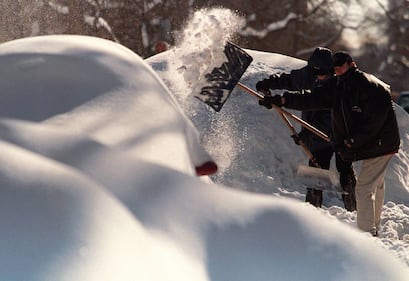
Public Safety Canada said 21 people died due to the blizzard, 13 from overexertion while shovelling snow. One person died when strong winds knocked down a streetcar they were in. (City of Toronto Archives)
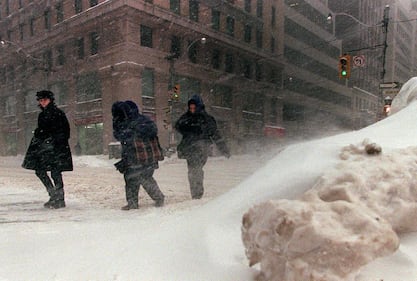
January 1999: Lastman calls in the military Toronto had a very snowy start to 1999, seeing about 40 centimetres of snow the day after the new year. Snow continued to fall, which wreaked havoc on roads and public transit. It prompted Mayor Mel Lastman to declare a snow emergency. (KEVIN FRAYER/Canadian Press)
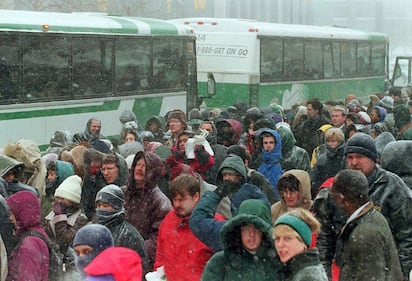
About 78 centimetres of snow fell two weeks later as another winter storm pummelled the city between Jan. 13 and 15, further crippling transit and causing about 1.4 million commuters to be stranded. (KEVIN FRAYER/Canadian Press)
The transit shutdown led to fighting between riders, according to Public Safety Canada. About a dozen flights were also cancelled at Pearson Airport during that storm. (KEVIN FRAYER/Canadian Press)
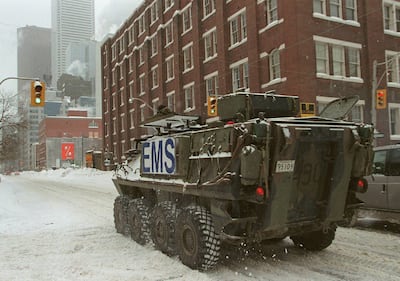
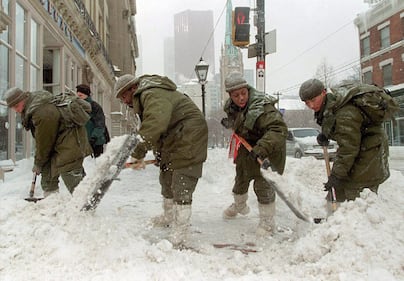
Mayor Mel Lastman declared a second snow emergency and asked the federal government for help with snow cleanup. According to Public Safety Canada, about 430 soldiers were deployed in Toronto. “Most places we go into, the people don’t want us there,” one Canadian soldier told CTV News Toronto at the time. “It’s a nice thing to help your own Canadian people.” (FRANK GUNN/Canadian Press)
The predicament was a source of humour for national newspapers, many of which made fun at the city. Mayor Lastman pushed back and said, “They can laugh, they can do anything they damn well want. But come on down here and see what Toronto’s going through.” The storm, which moved through Southern Ontario, left two people dead. The damage caused by the storm was estimated to be about $122 million. (KEVIN FRAYER/The Canadian Press)
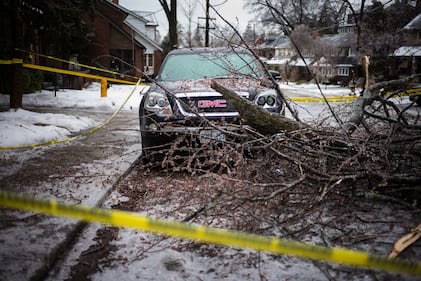
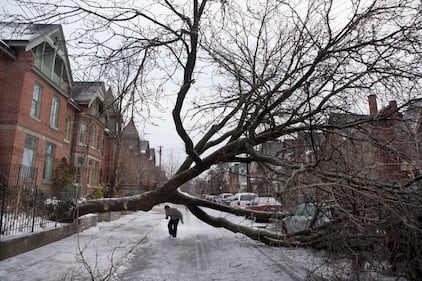
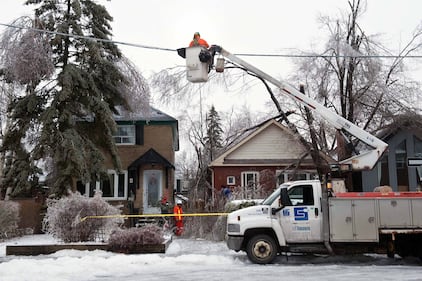
December 2013: The Toronto ice storm An ice storm days before Christmas in 2013 brought Toronto and its surrounding areas to a standstill. According to Environment Canada, a winter storm brought freezing rain and damaging ice accumulation across Southern Ontario. In the Greater Toronto Area, ice accumulation reached up to 30 millimetres. (Galit Rodan/The Canadian Press)
Environment Canada said at Toronto Pearson Airport, it recorded 43 hours of freezing rain and drizzle between the evening of Dec. 20 and late afternoon of Dec. 22. (Matthew Sherwood/The Canadian Press)
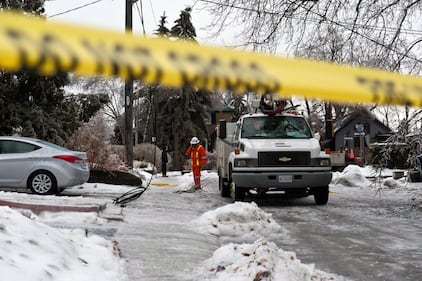
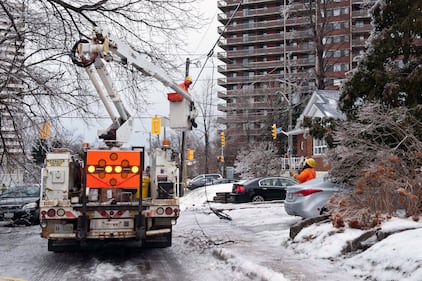
The ice accumulation caused tree branches to break and fall on power lines, resulting in a massive outage that lasted more than a week for hundreds of thousands of residents. Many were left to spend Christmas in the dark and without heat. (Ian Willms/The Canadian Press)
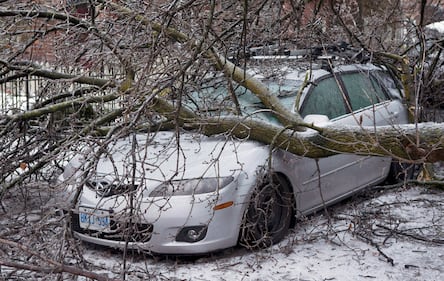
Homes and vehicles were also damaged by fallen trees and downed hydro lines, displacing thousands of city residents from their homes. As a result, Toronto opened warming centres. (Galit Rodan/The Canadian Press)
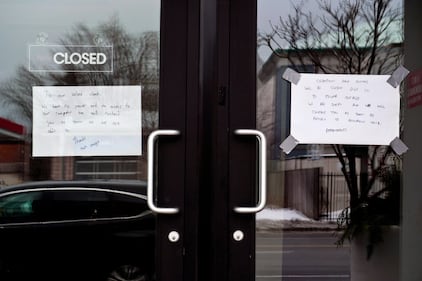
The storm also impacted businesses during one of the busiest shopping weeks of the year. According to Public Safety Canada, the winter storm cost about $262,781,642. (Galit Rodan/The Canadian Press)
Freezing temperatures that followed the storm exacerbated the situation. “The icy weather left the city with a fractured transit system, a water pumping station out of commission and two major hospitals running on back-up generators,” Environment Canada said. (Matthew Sherwood/The Canadian Press)
Two people died north of Toronto due to carbon monoxide poisoning from improperly ventilated generators and heaters. Eleven other people in and around the city were also hospitalized because of carbon monoxide poisoning. (Galit Rodan/The Canadian Press)
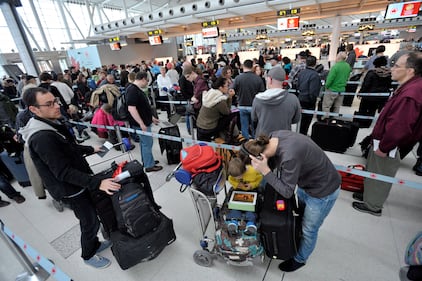
The storm also complicated holiday travel for countless residents with hundreds of flight delays and cancellations reported. (J.P. MOCZULSKI/The Canadian Press)
January 2022: 55 cm of snow in just two days In just 15 hours, 55 centimetres of snow fell on Toronto between Jan. 16 and 17, 2022, as the city was hit by one of the biggest winter storms it had seen in many years. (Chris Young/The Canadian Press)
Environment Canada issued a rare blizzard warning for the city, which was the first since 1993. During the peak of the storm, about eight to 10 centimetres of snow fell each hour, and winds gusted to 60 kilometres an hour. (Frank Gunn/THE CANADIAN PRESS)
The Don Valley Parkway and the Gardiner Expressway were closed for several hours, and emergency services responded to dozens of collisions and stranded motorists.
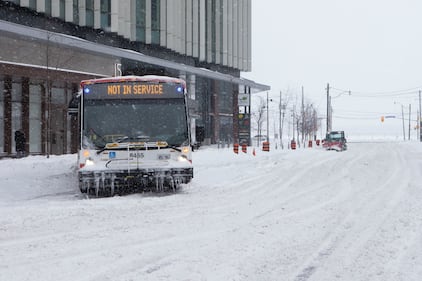
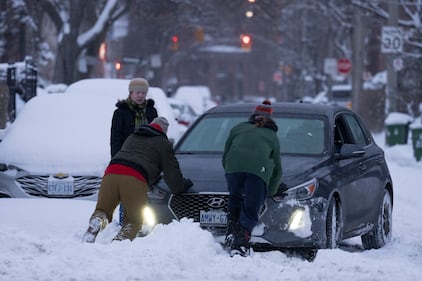
The massive snowstorm also wreaked havoc on transportation, schools, garbage collection and other services. Hundreds of TTC buses were stuck in the snow and had to be dug out, and the Scarborough RT had to be shut down due to the snowy conditions. (Frank Gunn/THE CANADIAN PRESS)
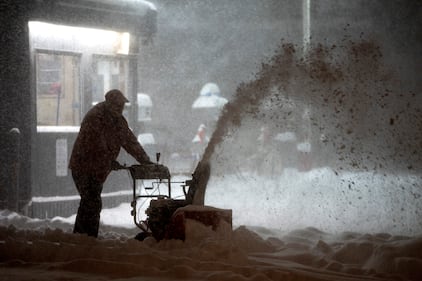
The storm was accompanied by extremely cold temperatures that lasted for two weeks, making snow cleanup a struggle. According to the city, 180,000 tonnes of snow were removed from streets, sidewalks, and bicycle paths at a cost of more than $17 million. (Frank Gunn/THE CANADIAN PRESS)
The Jan. 17, 2022, storm was one of the top ten single largest snowfall events ever recorded in the city. (Frank Gunn/THE CANADIAN PRESS)
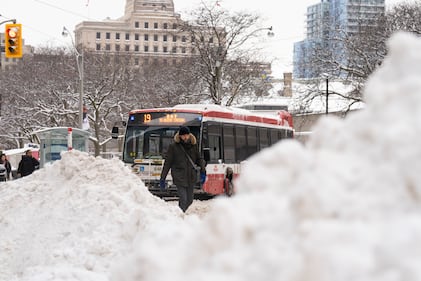
February, 2025: Back-to-back-to-back winter storms Back-to-back-to-back winter storms in February 2025 created mountains of snow along roadways, bike lanes and sidewalks across the city. (Arlyn McAdorey/The Canadian Press)
More than 50 centimetres of snow blanketed the city in the span of a week, snarling subway service and resulting in more than 100 crashes on highways. Environment Canada said during the storm, the region experienced 73 hours of blowing snow. (Arlyn McAdorey/The Canadian Press)
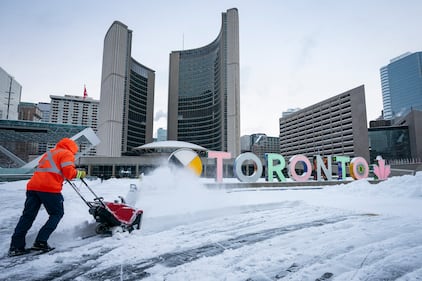
The storms also forced tourist attractions to close due to poor weather conditions. Cold temperatures also made it hard for crews to remove the snow. Toronto received over 25,000 calls for service after the storms. (The Canadian Press)
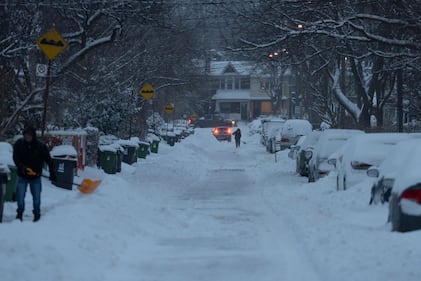
The city was heavily criticized for its poor winter clearing operations. Residents complained about unplowed sidewalks and inaccessible roads. (The Canadian Press)
During a city council meeting in November 2025, councillors voted in favour of an updated snow removal plan in hopes of avoiding a repeat of what happened during the February storms. (Arlyn McAdorey)