

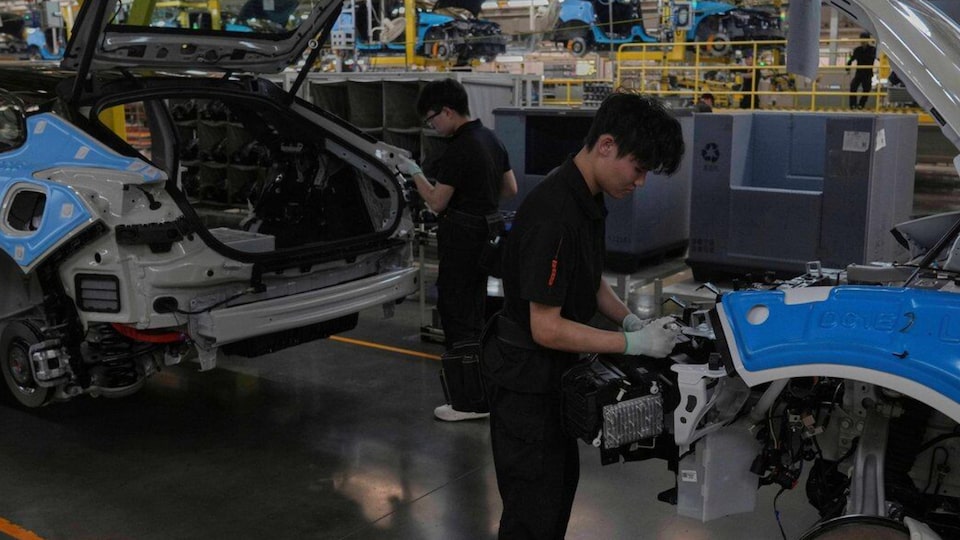

Canada’s automotive sector is calling for greater clarity after the federal government announced a landmark tariff and quota deal with China, which caps electric vehicle (EV) imports at 49,000 - the implications of which are largely unknown to industry players.
David Adams, president of the Global Automakers of Canada, said his organization was not consulted prior to the announcement and that many details are still unsettled.
“We just heard about this announcement early this morning ... there are a lot of unknowns at this point in time,” he told CTV News Channel Friday.
Adams said he expects a full consultative meeting with government officials after they return from China to better understand commitments.
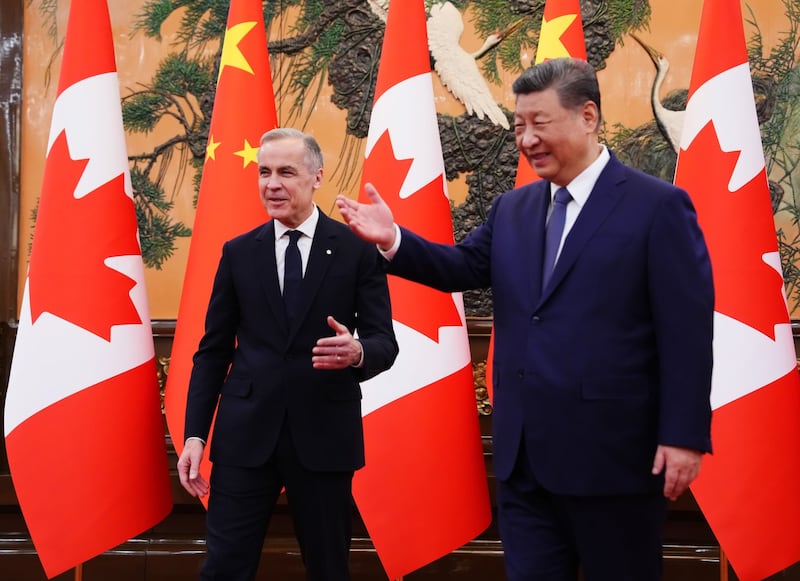
On Friday, Prime Minister Mark Carney announced Canada reached a deal with Beijing to slash tariffs on a set number of Chinese EVs in exchange for China dropping duties on agriculture products.
Carney described it as a “preliminary, but landmark” agreement to remove trade barriers, part of a broader strategic partnership with China that includes increasing both tourism and cultural ties. Carney also said Xi has committed to visa-free travel for Canadians to China.
Canada will allow up to 49,000 EVs into the country annually at a reduced tariff of 6.1 per cent, down from the current 100 per cent rate.
Carney also said Ottawa expects Beijing to cut canola seed duties from 84 per cent to 15 per cent by March 1, including tariffs on Canadian canola meal, lobster, crab and peas until the end of the year.
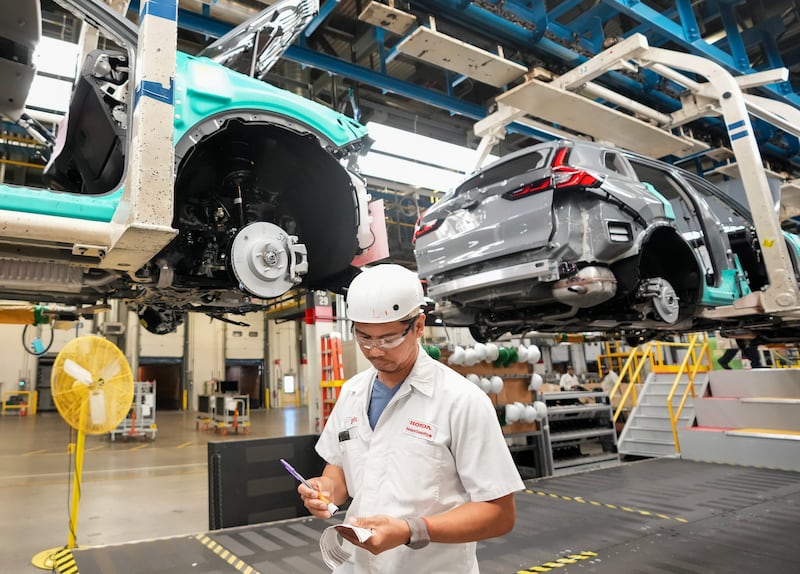
Adams said the uncertainty extends beyond China-specific policies to broader automotive strategy in Canada.
“It’s unclear where the 49,000 vehicles are, who’s going to be providing those vehicles, how that’s going to be given up amongst the players in the marketplace, right at the moment,” he explained.
The lack of detailed policy, he argued, adds to an already turbulent environment for automakers.
“What we really need as an industry is for the federal government to provide us with a full automotive strategy. There are a number of issues that are outstanding, like the electric vehicle mandate,” he advised.
With the U.S. taking its own distinct approach to Chinese EV competition, combined with a looming CUSMA review scheduled for July, Adams warned that diverging policies could strain North American co-operation.
“That could be something that that draws the ire from our neighbours to the south,” he said.

‘Cheap has a price’: Unifor national president
Lana Payne, Unifor national president, told CTV News Channel on Friday that she’s extremely disappointed with the deal.
“We have been, for a year now, in the fight of our lives as a union to try and protect good auto union jobs in this country, and the auto sector, too,” she said. “And this deal has just made that fight a little harder for us.”
Payne said that the deal is very risky, especially with the Canadian auto sector in a vulnerable position.
“Allowing cheap Chinese imports is not going to help us preserve and protect this auto industry,” she said, adding that for 7,000 of her members who work in auto assembling plants, they aren’t sure if their plants are coming back, making this especially bad news.
With CUSMA trade negotiations approaching, Payne said she suspects that things will only get harder.
“I would remind Canadians that cheap has the price, and that price is good union jobs, and good jobs that support communities here in our country,” she said.

What’s needed, according to Payne, is strong industrial auto policy for Canada, and that increasing the number of imports from parts of the world that build nothing in this country “only makes it harder to hold onto production in Canada.”
Payne added that a trade agreement with the U.S. is important, since a portion of what is build in the country will still need to be exported there, especially since what’s built in Canada likely won’t be exported to Europe, which has its own car industry.
“We buy two million cars in Canada a year,” she said. “We don’t make anywhere near that. And we have to get to a place where ... if you’re going to sell vehicles in Canada, you need to build in Canada, and there needs to be strong unionization to make sure that those jobs are good jobs.”
Risking the auto sector and advanced manufacturing will have a ripple effect on the steel and aluminum sectors, Payne warned.
“It is all interconnected into our industrial economy, and the auto sector is at the foundation of that,” she said. “And it’s about time in this country, we realize just how important it is, and do what every other country in the world is trying to do, and that’s protecting their auto industry and the good jobs that go with it.”
With files from The Canadian Press