When Mayor Olivia Chow took office in 2023, she insisted she could not indicate what the property tax increase might look like ahead of her first budget as mayor.
The increase would have to be decided after all of the city’s needs and priorities were accounted for through the budget process, Chow said – a departure from her predecessor who won three terms insisting property tax increases stay at or below the rate of inflation.
That first budget ended up yielding the largest property tax increase the city had seen since amalgamation – a 9.5 per cent hike Chow said was needed in order to help bolster the city’s ailing finances.
But heading toward her third budget as mayor – the one she will table before the next municipal election in October 2026 – there seems to be a different approach at city hall.
Budget Chief Shelley Carroll has consistently said this year’s budget will be “leaner” and more focused on affordability. While Chow has said she cannot provide a target increase before the budget is tabled, Carroll has said she’s “working towards” a smaller increase and there are signs that every effort is underway to make sure that increase is as small as possible.
A few months back the city implemented a hiring freeze for non-essential roles. The city’s chief medical officer of health told CP24 that even she needed to make a good case for hiring some of the many vacancies the agency currently needs to fill.
Then at a Nov. 13 city council meeting, Chow moved an urgent last-minute motion to replace the Toronto Parking Authority (TPA) Board with unpaid city officials in order to help plug an opening operating budget pressure of $1.072 billion.
Speaking with reporters the following day, Chow said the sudden move to axe the board of the mid-sized agency, which has a budget of around $144 million, was needed to find efficiencies ahead of the 2026 budget because “we have to find every single dollar.”
Signs point to reelection campaign
Chow has not yet said whether she will run for re-election. But those with a keen eye on city hall say the tea leaves are clear.
“All signs to me point that the mayor is looking to run for reelection, and that these are the moves that she’s making so that she can have a budget that she can campaign on,” said David Valentin, a principal at Liaison Strategies, a government relations and polling firm.
“I think the mayor is aware that if she were to propose a large property tax increase, as she has in the past, that would be quite unpopular, it would be a hindrance for her. She wants to prove to people that she cares about affordability, which is one of the top issues in the city. And she wants to show, listen, I can govern under restraint too.”
Scott Reid, a political analyst for CTV News, sees a similar strategy at play.
“This has 110 per cent to do with the coming election, obviously,” Reid says. “And I think what you’re seeing is the consequence of a three-year strategy that’s been built around taxes. It’s been deliberately designed and now implemented around trying to insulate Mayor Chow in a reelection campaign from the accusation that she’s a mad king taxer.”
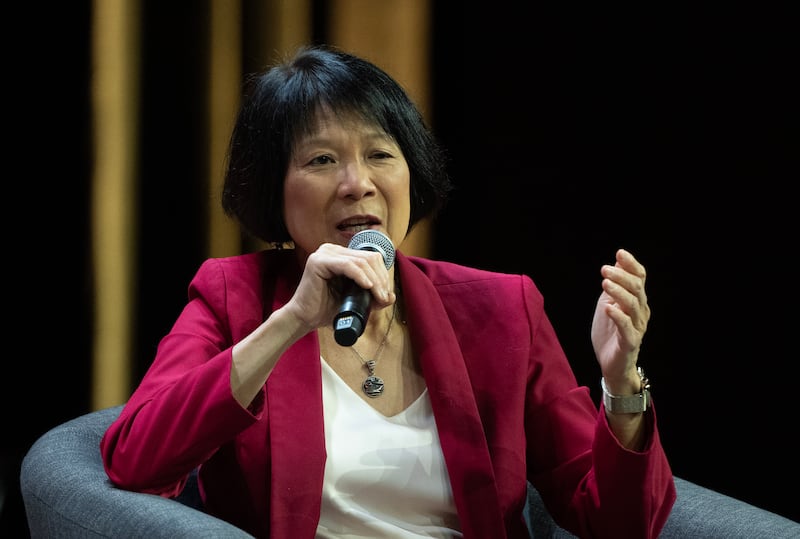
Indeed Chow has indicated she is less willing this year to make up any shortfall through higher property taxes.
The mayor briefly floated the idea back in September that Toronto taxpayers might have to pay more if the federal government didn’t increase funding for shelters. But she quickly posted on X later the same day that she would not ask taxpayers to make up the difference as doing so would be unfair.
That’s a change from past years. In 2024, Carroll proposed the addition of a six per cent “Federal Impacts Levy” to make up for the shortfall from the feds, a move that would have resulted in a 15.5 per cent property tax hike (The city ultimately opted instead for the 9.5 per cent hike).
At the launch of the latest budget process in October, Carroll said “the 2026 budget will be a leaner one.” However she denied that has anything to do with the October election.
“No, this was a commitment that we made from the very beginning, that we needed Torontonians to make an extraordinary investment to help us dig out of an unprecedented pandemic and a decade of underinvestment,” Carroll said.
She added the city always knew it would have to keep looking for efficiencies “so that that extraordinary investment didn’t become the permanent (increase) but was a temporary need within a multi-year plan to get our house back in order.”
In a year-end interview with Newstalk 1010, Chow insisted a specific number for the property tax increase has not yet been decided.
“We do not know, because we’re still discussing it,” Chow said. “We want to make life as affordable as possible, so we’re looking at the services we provide.”
She pointed to the recently announced freeze on TTC fares for the third year in a row, as well as an expanded school nutrition program the city implemented this year.
Pressed about the fact that the city needs to find money to pay for those programs, Chow pointed to the hike she put forward on the municipal land transfer tax for homes worth more than $3 million.
“If their property (value) is so high – they’re only two per cent of all sales – they can afford to pay a bit more. And from that, it’s $150 million that we can get from that,” Chow said.
She said the tax means that “average” homeowners will see less of an increase.
Will it work?
It’s no secret that keeping taxes low in an election year is good politics.
“I think it’s no mystery that the closer you get to an election date, the more you put the brakes on rising tax increases,” says Myer Siemiatycki, professor emeritus of politics at Toronto Metropolitan University (TMU). “That’s not a great platform to go into an election campaign with, an escalating tax hit on the public.
“So I think this is par for the course of how any politician would calibrate their tax policies and measures.”
What’s less clear is whether the strategy will work for the mayor.
“It’s sort of like if I start off by kicking you in the head, you’re going to thank me for punching you in the gut,” Reid says, pointing out that even with a smaller tax hike in 2026, people could look at Chow’s collective record.
“But sometimes plans that are designed on paper don’t match up with how things work in the real world. My argument would be that all that the mayor has done over the course of the past three years is help to brand herself as someone who has raised taxes so often people are like, ‘I don’t want to be kicked in the head or punched in the gut. Thanks, but no thanks.’”
He adds that one could perhaps pull off a plan to start with higher taxes and climb down if people feel they are getting great services for their money, but not if “the city still feels busted like a dropped beer bottle.”
He points out that dissatisfaction with some key services has started to reflect on Chow’s popularity in the past six months, making her more venerable to an election where voters are seeking change.
For example overall customer satisfaction with the TTC sits at 66 per cent, down five per cent from a year ago, according to the latest numbers. Customer satisfaction with personal safety on the TTC is also down to 56 per cent – three percentage points lower than a year ago.
“People’s dissatisfaction with the city – the way it functions, the way it operates, the frustrations of living in Toronto – are now starting to be borne by the mayor personally, and that’s a bad recipe going into an election year,” Reid says.
A recent Liaison poll put Chow’s approval rating at 53 per cent, compared to 60 per cent a year earlier, and 72 per cent two years before that.
But Valentin points out Chow has been trying to deliver as many easy wins as possible at the same time. He points to a recent announcement that the Scarborough busway will be completed sooner than scheduled, as well as an announcement that TTC fares will be capped for Presto users on a monthly basis in 2026.
A lower property tax increase for next year, he says, could help “defang” some of the criticism against her.
“I think to a certain extent, if she (Chow) is able to stabilize things and get a smaller tax increase passed through the budget, she’s going to find herself on pretty good footing for the next election,” Valentin says. “And there’s a reason for that. None of this was planned by accident. I think they went into the term knowing they had to figure out a way to run for reelection. And you just can’t run on double digit increases every year.”
Putting through the increase to the municipal land transfer tax now means “it’s unlikely to still be in the mirror in October,” he predicts.
Siemiatycki points out that the large property tax increase in Chow’s first year was coupled with a big win in the form of a new deal with the province that will see the city receive billions of dollars in provincial support over a number of years.
“I think Mayor Chow is wanting to signal that she has been financially responsible, that when it was clear that more revenues were needed, she generated more from the property tax, and then leveraged that to get credibility with Premier (Doug) Ford to give a major increase in provincial funding to the City of Toronto,” he says.
Ford, for his part, has suggested that any local politician who raises taxes will be punished at the ballot box in October.
While it’s not clear exactly what number will signify fiscal restraint Siemiatycki said “it’s a pretty safe bet that it’s going to come in under 6.9 (per cent), which was last year’s increase.”
“I think any opponent candidates will say she’s an over-taxer of Torontonians. So I would imagine she’s preparing her counterattack for those kinds of criticisms. And I think there’s a strong case you can make for doing what was necessary for the City of Toronto, and having, in fact brought the City of Toronto a whole whack of new revenue that no previous mayor was able to achieve.”
Coun. Brad Bradford, who has said he plans to run for mayor again this coming year, has not yet said what his property tax policy would be. But in an interview with CP24 several weeks ago, he slammed Chow for making life “very expensive” for Toronto residents and said “affordability is going to be top of mind” in his platform.
Still, Valentin points out there is a portion of the electorate who are unhappy with the mayor’s leadership, aside from her tax policies.
“She could deliver a zero per cent tax increase and they wouldn’t be happy. So this, this is not for them,” he says.
“This is for the swing voters who like the mayor personally. They like to see her at community events. They think she’s a nice person. They think she has good intentions. They’re just not sure if they can afford her.”
The 2026 budget launch is expected to kick off at city hall on Thursday.