

Ontario Premier Doug Ford is slamming Prime Minister Mark Carney’s trade deal with China, saying it gives that country “a foothold” in the Canadian market which will hurt workers here.
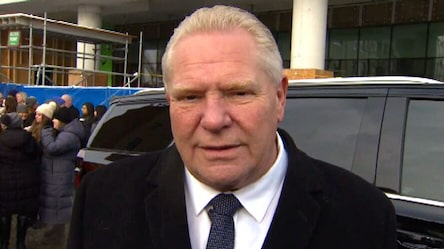
“It’s going to hurt every single auto manufacturer, every single supply chain that has anything to do the auto sector,” Ford told reporters at an unrelated announcement in Toronto Friday.
“This was not thought out properly. It wasn’t consulted. It was a knee-jerk reaction, as far as I’m concerned and this is going to be a big, big problem.”
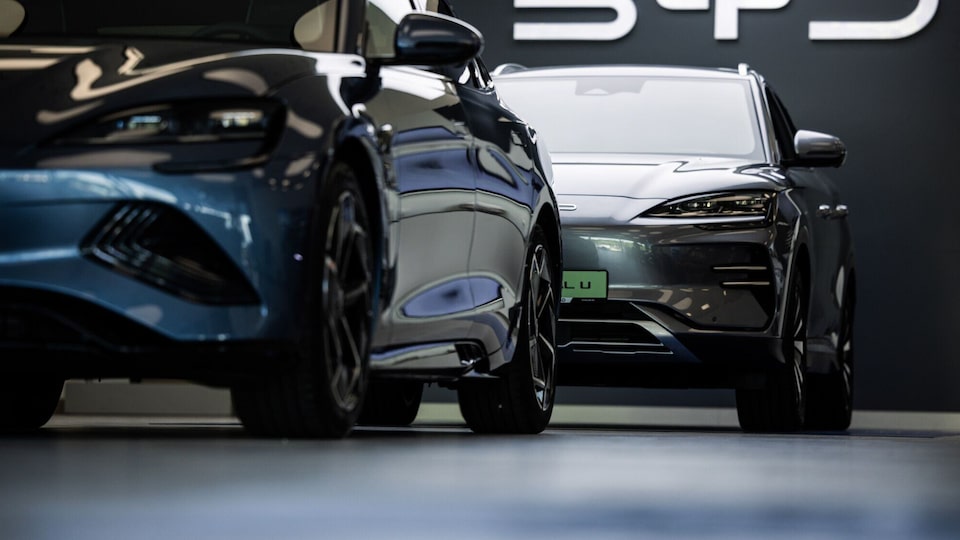
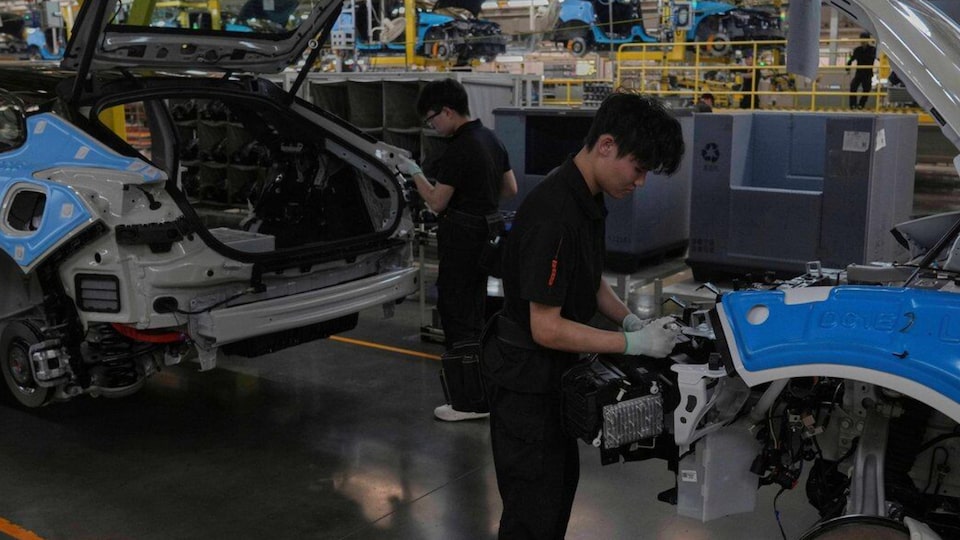
Prime Minister Mark Carney announced Friday he had reached a trade deal with China that will see Beijing ease its tariffs on some Canadian canola, seafood and vegetable products in exchange for allowing up to 49,000 Chinese EVs into Canada per year at a 6.1 per cent tariff.
Carney said the Chinese EVs would account for around three per cent of the Canadian market.
Ford said Carney did not reach out to him or the auto sector before making the deal.
‘Subsidized spy cars’
He also referred to Chinese-made EVs as “subsidized spy cars” and said Canadians who buy them might not be able to drive them to the U.S. because of concerns over cyber security in Chinese-made technology.
The deal also flies in the face of the tone Carney has preached in the past, Ford said.
“He always preaches partnership. This is anything but a partnership,” he said. “And it’s totally, totally unacceptable that he’s bringing in Chinese-made cars and that are totally subsidized. They’re gonna undermine every auto manufacturer here.”
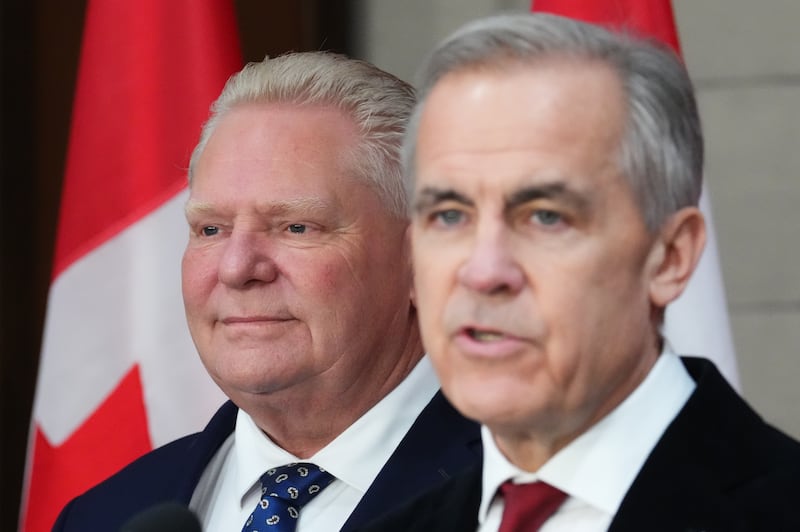
The premier pointed out the deal comes with no guarantees about investments in Canada’s economy, auto sector or supply chain.
“Worse, by lowering tariffs on Chinese electric vehicles this lopsided deal risks closing the door on Canadian automakers to the American market, our largest export destination, which would hurt our economy and lead to job losses.”
Ford said earlier this week he was “100 per cent dead against” a trade deal that would see Canada lift tariffs on much cheaper Chinese EVs, potentially flooding the market with vehicles that would outprice those made in Canada.
He also suggested such a move would risk angering U.S. President Donald Trump as Canada tries to renegotiate the USMCA deal.
Canada began applying a 100 per cent tariff to Chinese-made EVs in lockstep with the United States in 2024, with China retaliating with punishing tariffs on canola, pork and other Canadian goods.
In a statement, Unifor President Lana Payne echoed Ford’s comments and called the EV deal “a self-inflicted wound to an already injured Canadian auto industry.”
“The Canadian government’s decision to open the door to China-owned EV imports poses extreme risk to Canadian auto jobs and the future of our entire auto sector,” the union said.
In a post on X Friday, Ford said Carney needs “to fix this mess” by supporting Ontario’s auto sector.
“Make no mistake: China now has a foothold in the Canadian market and will use it to their full advantage at the expense of Canadian workers,” Ford wrote.
Make no mistake: China now has a foothold in the Canadian market and will use it to their full advantage at the expense of Canadian workers.
— Doug Ford (@fordnation) January 16, 2026
The federal government is inviting a flood of cheap made-in-China electric vehicles without any real guarantee of equal or immediate…
He called on the federal government to end the electric vehicle mandate, harmonize regulations with key trading partners and scrap federal fees that add to vehicle costs.
“Instead of importing made-in-China vehicles, the federal government needs to be focused on working with Ontario to bring investment and jobs to factory floors in Brampton, Oshawa, Ingersoll and across the province, where assembly lines are at risk or have already left the country,” Ford said in his statement.
Ontario’s auto sector has been struggling under the weight of a trade war with the U.S. that has seen some big American car manufacturers cut jobs and move work to the U.S.
Ford has been fighting to hold those companies to their commitments in Ontario and to bolster the province’s auto manufacturing sector.
EV prices in Ontario have also climbed in recent years, due to inflation and other factors, including the termination of federal and provincial rebates for consumers.
With files from The Canadian Press